


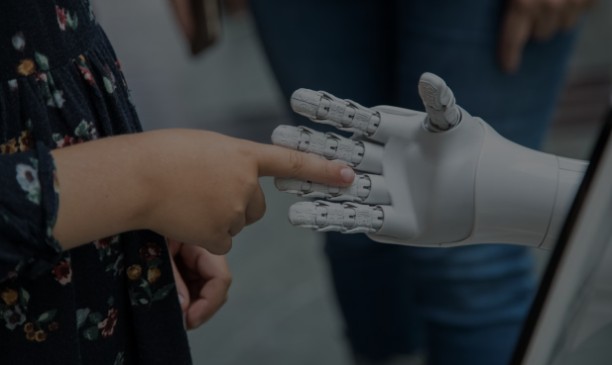
The story we often hear about artificial intelligence paints a grim picture: a future where human skills are obsolete. While that makes for a compelling narrative, it misses the much more interesting reality. AI isn’t here to replace our intelligence; it’s here to boost it. Instead of seeing this technology as a rival, we can think of it as a powerful partner that makes us more creative, streamlines our work, and helps us reach new levels of skill.
This shift in how we see things is crucial. The future isn’t about humans against machines; it’s about humans *with* machines. When we learn how to work alongside AI, we can free ourselves from repetitive tasks and focus on the unique human qualities that technology can’t replicate, like strategic thinking, emotional intelligence, and genuine innovation.
Moving Beyond the Replacement Myth
It’s understandable to worry about technology replacing us, but that fear often comes from misunderstanding what AI actually does. A lot of what we see is automation, where technology takes over tasks that are repetitive and follow clear rules. This is different from augmentation, which is when technology helps us do things better, faster, or more creatively. The whole point of augmentation is to enhance, not eliminate, human skills in the age of AI.
Imagine a graphic designer using an AI tool to quickly generate dozens of logo concepts. The designer’s expertise is still essential to pick the best idea, understand the client’s brand, and make the final strategic choice. The AI handles the tedious initial work, giving the designer more time for higher-level creative input. This kind of partnership makes the whole process more efficient and can lead to more innovative results.
AI as a Creative Partner, Not a Competitor
One of the most exciting areas for AI is its potential as a creative partner. For writers, artists, musicians, and programmers, AI tools can help overcome creative blocks and suggest new paths to explore. An AI can analyse huge amounts of music to recommend a chord progression you hadn’t thought of, or help a developer find a more elegant solution to a coding problem. It acts as an endless source of inspiration and feedback.
This collaborative approach shows us the true potential for growth. When you hand off the more mundane parts of a task to an AI, you have more mental energy to focus on the core creative challenge. This teamwork is central to the conversation about AI human potential, as it allows us to push our own limits. The technology becomes a tool that expands what we can do, rather than a force that restricts it.
The New Essential Skills in an AI-Powered World
As AI takes on more analytical and repetitive work, the most valuable human skills are changing. Technical know-how will always be important, but soft skills are becoming the real game-changers. The future of human intelligence in this new era will be defined by our ability to do what machines cannot.
These essential skills include:
- Critical Thinking and Problem-Solving: AI can provide data, but it takes a human to interpret it, question its assumptions, and apply it to complex, real-world problems.
- Emotional Intelligence: Understanding and managing human emotions, both your own and others’, is crucial for leadership, teamwork, and client relationships.
- Creativity and Imagination: Coming up with truly original ideas, telling compelling stories, and thinking outside the box are fundamentally human traits that AI can support but not replicate, though technology can help improve your videography skills.
- Adaptability and Learning: The ability to continuously learn new skills and adjust to changing technology will be vital for long-term career success.
Practical Ways to Augment Your Own Skills
You don’t need to be a data scientist to start using AI to your advantage. Many accessible tools can be integrated into your daily workflow to boost your productivity and creativity. For instance, AI-powered writing assistants can help you refine your grammar, tone, and clarity, making your emails and reports more effective.
If you’re learning a new skill like coding, AI tutors can give instant feedback and explain complex concepts simply. In project management, AI can help organise tasks, predict timelines, and spot potential bottlenecks before they become big problems. The key is to try different tools and find what works for you. Start small by using an AI to brainstorm ideas for your next project or to summarise a long article. You’ll quickly see how it can become an indispensable part of your personal toolkit.
The age of AI isn’t something to fear; it’s an opportunity to embrace. By focusing on enhancing our skills and working with technology, we can unlock a more creative, efficient, and fulfilling future for ourselves.







 Cyber Geek Girl