

Published to mark the start of Neurodiversity Celebration Week, 17 March 2026
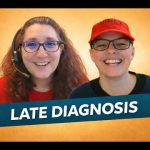
There are conversations that stay with you. Not because they followed a script or delivered a neat series of takeaways, but because they felt honest, warm, and genuinely human. My recent interview with Jenine Lillian for their YouTube series Neurodivergent Narratives was exactly that kind of conversation.
Jenine is an #ActuallyAutistic neurodiversity consultant and educator based in Canada, with 30 years of experience in education. They received a very late-in-life diagnosis of Autism and Dyslexia and have since built a practice rooted in authenticity, vulnerability, and what they beautifully describe as joyful neurodivergence. It is a philosophy I recognise deeply in my own work, and it made for a conversation that felt less like an interview and more like two people finally finding their language.
Starting With the Unconventional
Jenine opened by asking me to introduce myself in an unconventional way. No job titles, no career timeline. Instead: special interests, mantras, what is lighting me up right now. It is the kind of question that immediately signals you are in safe hands.
So I talked about two of my great passions: nuclear war and the Cold War period of history (timely, given the current state of the world), and my love of retro and vintage computing. My husband Russell and I have taken over two rooms in our house and dedicated them to retro computers, curated from eBay and various other platforms, filled with every model from back in the day that you can imagine. The Commodore, the Amiga, the original Apple Mac, the BBC Micro, the ZX Spectrum, the Atari ST, and my very first: a Texas Instruments TI-99/4A. Every single one still works. Every single one still runs games.
Jenine was delighted. They talked about their own special interests: birds, particularly what Simon Barnes describes as the little brown jobs, food preparation as ritual and nourishment, and an enduring love of real conversations with real people. That last one is why they started Neurodivergent Narratives, and it came through in every question they asked.
The Neurodivergent Mind as Engine
When Jenine asked about the strengths and assets of my particular neurodivergent mind, I had to pause. Because neurodiversity was not even a word on my radar until 2018, when I received my autism diagnosis. That diagnosis was followed in 2023 by ADHD, dyspraxia, and dyscalculia. As Jenine put it with characteristic warmth: I have the smorgasbord.
But finding all of that out was, in the truest sense, like a light bulb switching on. A lifetime of wondering why I could not quite fit in suddenly had a framework. And more than that: the things I had been quietly ashamed of began to reveal themselves as genuine strengths.
My neurodivergent brain is, as I told Jenine, the engine behind a lot of what I do creatively. I began my career in journalism and broadcasting, eventually working with Chris Tarrant during the early years of Who Wants to Be a Millionaire, being there at the very beginning when “Millionaire” was a format on A4 paper titled “Cash Mountain” and become a global phenomenon. That storytelling instinct has never left me. Even as a child I was always writing, always creating characters, building entire worlds in words because I did not fit into the real one.
My brain also looks naturally for connections between things that other people might not immediately see. I can look at a string of code or a piece of writing and spot a misplaced full stop (or period, for those reading from North America) almost immediately. It simply jumps out. And I can hyperfocus with extraordinary intensity on subjects I care about, going very deep very quickly.
In my security awareness work, all this matters enormously. Being able to tell a compelling story, rather than simply reciting technical information, genuinely helps people change their behaviour. It helps them notice a phishing email, approach their online safety differently, engage with the material rather than just clicking through a training module and answering three questions at the end. The real world does not work like that. And neither does the neurodivergent mind.
Masking, Burnout, and the Stage You Cannot Leave
One of the most resonant parts of our conversation was when we talked about masking. Jenine used the analogy of a stage performance: being in presenter mode, then needing to step off the stage. I knew that image instantly.
For most of my life, I felt like I was on a stage I simply could not get off. And throughout those years, I experienced what I now understand to be significant autistic and ADHD burnout. Two or three times a year I would just shut down completely, unable to function for up to two weeks at a time. I assumed, for years, that this was something everyone experienced. It was not.
When I finally understood what was happening, I began putting things in place to support myself. Working from home since 2015 (initially prompted by homing my dog Poppy, who needed time to settle) turned out to be transformative. The office environment, with its unpredictable sounds, smells, interruptions, and lights, had been quietly exhausting me for years. One job had me sitting near the kitchen. If someone heated fish in the microwave, the day was over.
Now I factor in real downtime before and after any event or conference. I block off my calendar on what I call downtime days, and I am absolutely fastidious about it. I limit social interactions, I protect my weekends, and I walk my dog twice a day, first thing in the morning before the working day begins, which is non-negotiable. Jenine noted, with genuine warmth, that I was describing the whole package of sustainable self-care. I had to laugh. These are all hard-won lessons.
Other things that help: drinking plenty of water, smart home technology (our lights and appliances switch on and off automatically, which means I am not lying awake wondering whether I left the washing machine running), and respecting the fact that my sensory experience of the world is simply different to someone else’s. We talked about the sensory experience of water: for Jenine it is deeply regulating, standing in the rain looking up at birds. For me, water on my face or in my ears is deeply uncomfortable. I even have plastic covers for my ears when I go to the hairdresser to have my hair permed. Neither response is wrong. None of us are the same.
The Unlearning Journey
Jenine closed the interview by asking if I had any words of encouragement for people listening. I found myself talking about something that has been very present for me recently: the concept of unlearning.
I have just delivered a keynote called The Unlearning Journey, and the idea behind it has genuinely stayed with me. We spend so much of our lives accumulating information, habits, and beliefs. We spend so much time masking. And sometimes I think the most powerful thing we can do is simply stop and ask ourselves: which of these things is actually still serving me?
For those of us who received a late diagnosis, or who have spent a lifetime masking, there is a real and ongoing process of unlearning everything we absorbed in order to fit in. I often use an analogy in my talks. I describe feeling like an alien on Earth. And because Doctor Who and Star Trek are among my special interests, I reach for a particular image: Mr Spock, sitting on the bridge of the Enterprise, while the rest of the crew share a joke. The camera turns to Leonard Nimoy who plays him. His expression is completely unreadable. He cannot work out the social nuance. He has missed the joke entirely. That is me. I am a Vulcan on Earth.
But the unlearning is not about becoming something else. It is about recognising that the internal critical voice, the one that used to hammer relentlessly, does not have to be the loudest voice in the room anymore. It may never fully leave. But it is possible, gradually, to turn the lens away from it and towards something else entirely.
Why This Conversation Matters
Jenine describes their business model as building community through collaboration: one authentic conversation at a time. That is precisely what Neurodivergent Narratives is. And it is precisely what Neurodiversity Celebration Week asks all of us to do: not just to acknowledge that neurodivergent minds exist, but to genuinely celebrate what those minds bring.
This year’s theme is “Working Together to Create a World That Understands: It Takes All Kinds of Different Minds”. I could not have said it better. And I am grateful to Jenine for creating a space where I could say it at all.
You can watch the full interview I did with Jenine on their YouTube channel here: https://youtu.be/KrWnRdr3MCg.





 Cyber Geek Girl