


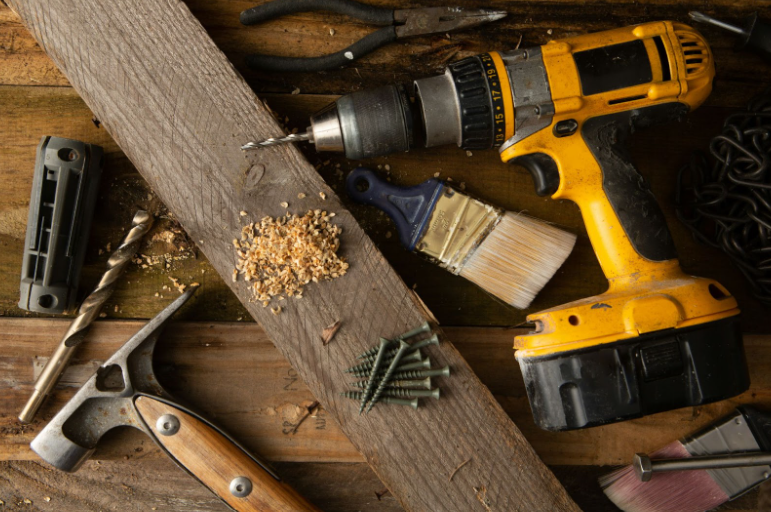
For any DIY project, the tools and equipment you have are just as important, if not more important, than your own skill sets.
The best tools can help you carry out your DIY projects with ease and, more importantly, success.
With that in mind, here are five essential tips that are worth knowing when choosing the right wood glue for your DIY projects this year.
Consider the project environment
One of the most important factors is where you’re going to be using the finished project. There are differences between indoor and outdoor projects.
For indoor projects that standard PVA glues are often ideal. These are typically labelled D1 and D2. They also offer strong bonds that are non-toxic and clean up easily with water before drying.
Outdoor projects and moisture exposure are something to consider, too. For items that are exposed to moisture, high humidity or rain, will require a water-resistant or fully waterproof wood glue.
Assess required bond strength and joint type
Different glues offer different levels of strength and flexibility. With that being said, it’s worth knowing which options are available
For standard wood-to-wood joints, high-quality PVa glue like this adhesive for wood to wood is recommended. It often provides a bond that’s stronger than the wood itself.
Heavy-duty and structural joints that bear heavy loads will need strong adhesives like a two-part epoxy or a polyurethane glue, for example.
Loose or uneven joints will benefit from epoxy or polyurethane, too, for filling any gaps or voids. PVA glue requires tight, well-fitting joints for optimised strength.
Factor in the drying and open time
It’s essential to factor in the drying and open time. This is how long you have to assemble and adjust the pieces before the glue begins to set.
For complex assemblies, you should choose a glue with a longer open time in order to allow for positioning and clamping.
With quick fixes and simple joints, a super glue or Cyanoacrylate glue is a better one for instant bonds.
Consider the final appearance and finish
For any DIY wood project, it’s worth considering the final appearance and finish. The colour of the dried glue matters if the project will have a clear or natural finish.
Invisible glue lines are achieved with most PVA glues. Avoid excess glue squeeze-out because it won’t absorb stain like wood and leave visible lines as a result.
Traditional hide glue absorbs stains well and is useful for when you’re restoring antiques. Polyurethane glues can also be stained when cured.
Prioritise safety and ease of cleanup
The safety and ease of cleanup should be prioritised. For beginners and those using glue for general use, PVA glues are non-toxic and water-based. This makes cleaning up easy enough with a damp cloth before it dries.
Specialised glues like epoxy and polyurethane require good ventilation and protective gloves due to fumes and a messier application.
Choosing the right wood glue for DIY projects is important, so use these tips when picking the right option.







 Cyber Geek Girl